
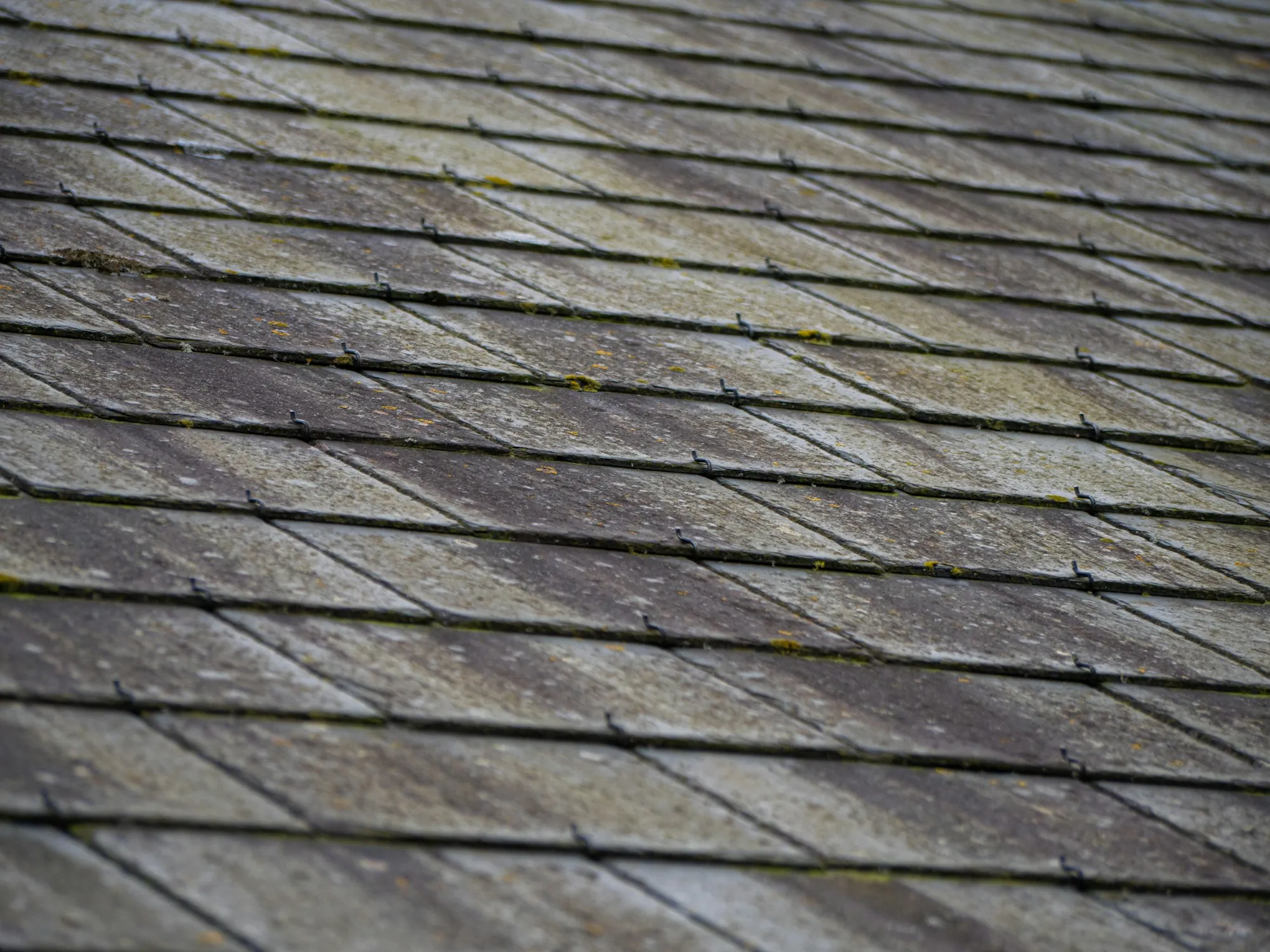
Is it time to stop patching and replace the roof? For most Brookhaven homes, the answer comes down to whether the problems are isolated or spread across the whole roof. One cracked pipe boot on a ten-year-old roof is a repair. Brittle shingles on every slope, leaks in two rooms and a soft spot over the garage are a roof that is telling you it is finished. The eight signs below are the ones worth checking before you pay for another fix.
1. The leaks keep moving to new spots
A roof that leaks in a new place after each repair is usually failing as a system, not at one point. A single leak traced to a nail pop or a torn flashing seam is a fair candidate for roof repair. When the stain in the hallway ceiling is fixed and a new one shows up in a bedroom a season later, the shingles and underlayment are likely losing their ability to shed water everywhere, and each patch only covers the spot that failed first.
Keep a simple record: the date, the room and what the weather was doing. Three or more leaks in different areas within a couple of years is a strong pattern. It also gives whoever inspects the roof a head start on tracing where the water enters.
2. Granules are piling up in the gutters
Heavy granule loss across the whole roof is a sign the shingles are wearing out. Those sand-like granules protect the asphalt underneath from sunlight, and once they wash off, the shingle bakes and turns brittle. According to InterNACHI’s guide to inspecting asphalt shingles, uniform granule loss over time is a normal part of aging as the bond between the granules and the asphalt weakens, and slopes that face south and west tend to take the hardest beating.
Some granules in the gutters of a brand-new roof are normal, since loose ones shed during installation. The warning sign is a steady stream after every rain on an older roof, or bare, dark patches where the mat shows through.
3. Shingles are curled, cupped or cracked on more than one slope
Curling that shows up across several slopes means the shingles have reached the end of their service life. Edges that lift upward (cupping) or corners that turn up (clawing) stop lying flat, so wind gets underneath them and rain can be driven back up the roof. A handful of curled tabs in one spot can be replaced. When you can see the pattern from the street on the front and back of the house, replacement shingles will not seal properly against the old, stiff ones around them.
Look for cracks across the tabs, too. Brittle shingles crack when they are walked on or flexed, which makes even a careful repair harder to do without breaking the shingles next to it.
4. The roof is getting old, and storms are finding it
Roof age matters because older shingles hold up worse in wind. The NAIC summary of research by the Insurance Institute for Business and Home Safety reports that shingle age is a significant indicator of vulnerability to wind damage, for roofs as young as 10 years old. That does not mean a ten-year-old roof needs replacing. It means that as a roof ages, a storm that would have done nothing to it when it was new can start peeling off tabs.
In Brookhaven, spring and summer thunderstorms bring gusty wind, hail and falling limbs from the area’s tall hardwoods and pines. If an older roof loses shingles in nearly every strong storm, the repair bill adds up fast, and the roof underneath is not getting any younger.
5. The decking feels soft or the roofline sags
A sagging ridge or a spongy feel underfoot means water has reached the wood under the shingles. Sheathing that stays wet loses strength, and once boards are rotted, shingles cannot be nailed down properly over them. From the ground, look along the ridge and the eaves for dips. From the attic, look for dark stains, wet insulation, or points of daylight showing through the boards.
This is also where a permit can come into play. The City of Brookhaven’s permit FAQ says a permit is required when structural work such as replacing sheathing, rafters or trusses is involved, while replacing shingles alone may be done without one. A roof with widespread deck damage has moved well past a shingle repair.
6. There are already two layers of shingles
A second layer of shingles on top of the first rules out a quick fix. The added weight, the trapped heat and the uneven surface all shorten the life of the top layer, and repairs on a double-layer roof rarely seal cleanly. The same city FAQ notes that under current codes, old asphalt shingles must be removed before new asphalt shingles are installed. In practice, that means the next roof on a house in Ashford Park or Historic Brookhaven with two layers starts with a full tear-off down to the deck.
You can often spot a second layer by looking at the edge of the roof at the gutter line. Two stacked shingle edges, or a thick, lumpy edge, give it away.
7. Moss, algae and constant shade have soaked in
Moss holding moisture against the shingles is a repair problem until it has lifted them. Brookhaven has a lot of mature tree canopy, and shaded north slopes stay damp after rain. Dark streaks of algae are mostly cosmetic. Thick moss is different: it grows into the gaps between tabs, lifts the edges and keeps the mat wet. Once it has done that across a whole slope, scraping it off leaves shingles that no longer lie flat.
If the moss is limited to one shady corner, trimming limbs and spot repairs may be enough. If it covers most of the slope and the shingles underneath are curled, it is one more sign on the replacement side of the ledger.
8. Repairs are adding up to a large share of a new roof
The money test is simple: compare what you have spent on repairs lately, plus what the next one will cost, against what a new roof would cost. If several repairs a year are needed just to keep water out, you are paying to delay a replacement rather than avoid it. A new roof also resets the underlayment, flashing and vents at the same time, which a patch never does.
| What you see | Usually points to | Why |
|---|---|---|
| One leak with a clear cause | Repair | The rest of the roof is still shedding water |
| A few missing tabs after one storm | Repair | Isolated damage on shingles that still seal |
| Leaks in several rooms over time | Replacement | The roof is failing in more than one place |
| Curling or bald spots on several slopes | Replacement | New shingles will not seal against brittle ones |
| Soft decking or a sagging ridge | Replacement | The base under the shingles has failed |
| Two layers already on the roof | Replacement | A tear-off is required before new asphalt shingles |
Ask for a quote that breaks out what a full roof replacement includes, from tear-off and deck repairs to underlayment and flashing, so the comparison with one more repair is clear.
How to Settle the Repair Question on Your House
Start with the attic, not the shingles. A dry attic with sound boards and no daylight points toward a repair, even on a roof with a few rough spots. Stains, wet insulation or soft decking point the other way, whatever the shingles look like from the street. Next, count the signs on this list that apply to your roof. One sign usually means a repair. Three or more, especially leaks in several rooms, curling on several slopes or a second layer, means a repair is likely a short-term fix.
If you would rather have someone else make that call with photos in hand, our roof inspections cover the attic and the deck as well as the shingles. Roofing Brookhaven can then tell you whether a repair still makes sense or whether a replacement is the better use of the money, and you can learn more about us on the home page.